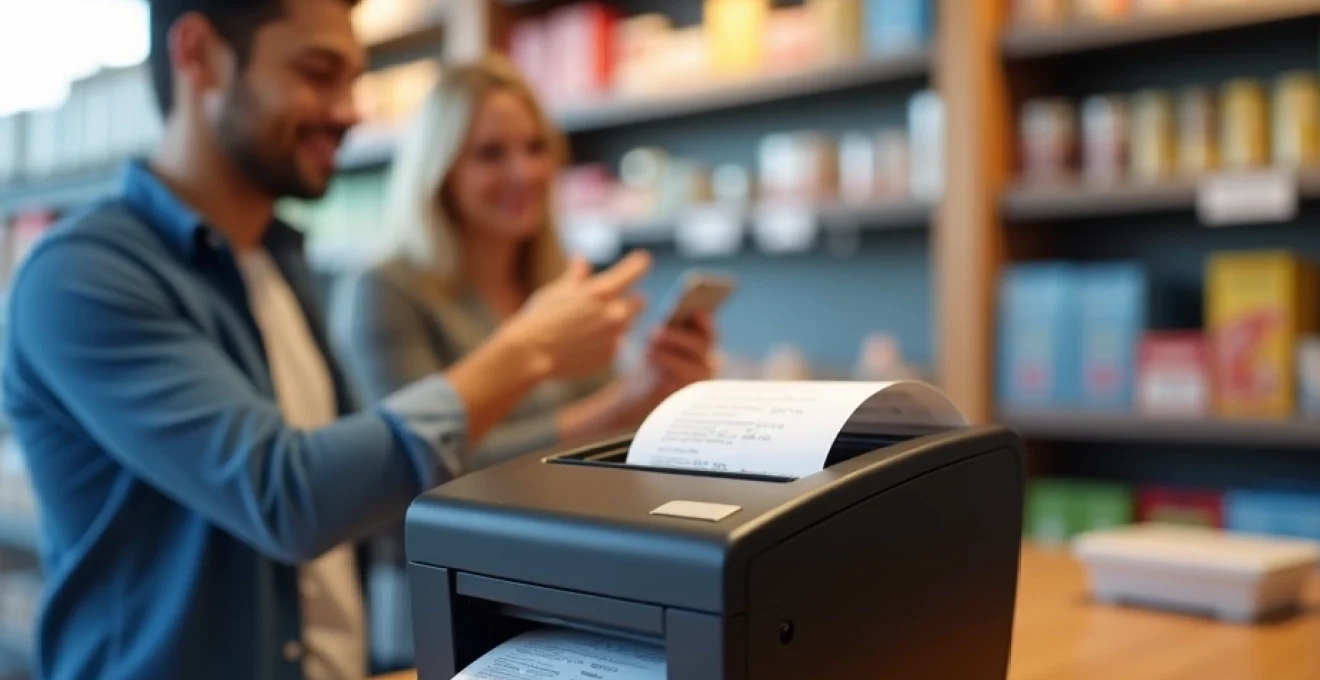
Modern retail environments demand efficiency, accuracy, and customer satisfaction at every touchpoint. Receipt printers have become essential tools that significantly impact the checkout experience, operational workflow, and overall business success. These devices serve as the final link in the transaction chain, providing customers with proof of purchase while helping retailers maintain detailed records for inventory management, accounting, and customer service purposes.
The evolution of receipt printer technology has transformed how retailers approach point-of-sale operations. From traditional impact printers to modern thermal solutions, these devices now offer unprecedented speed, reliability, and versatility that directly translate to improved business outcomes. Understanding the specific advantages of implementing receipt printers can help retailers make informed decisions about their checkout infrastructure and customer service capabilities.
Receipt printers streamline checkout process in retail stores
The checkout process represents a critical moment in the customer journey where efficiency directly impacts satisfaction levels. Receipt printers play a pivotal role in reducing transaction completion times by automatically generating purchase documentation without manual intervention. This automation eliminates the need for handwritten receipts or lengthy manual processes that can create bottlenecks during busy shopping periods.
Integration with point-of-sale systems allows receipt printers to instantly access transaction data and produce formatted receipts containing all necessary information. This seamless connection ensures that product names, prices, taxes, and payment details are accurately transferred from the POS system to the printed receipt without human error. The result is a smooth, professional checkout experience that reflects positively on the retailer’s brand image.
Modern receipt printers also support various receipt formats and customization options that enhance the checkout experience. Retailers can include promotional messages, return policies, loyalty program information, and store contact details on receipts, transforming a simple transaction record into a marketing tool. This dual functionality maximizes the value extracted from each customer interaction while maintaining operational efficiency.
Studies indicate that retailers using automated receipt printing systems experience up to 40% faster checkout times compared to manual receipt generation methods.
Thermal receipt printers offer faster printing speeds
Thermal printing technology has revolutionized receipt generation by eliminating the mechanical complexity of traditional impact printers. These devices use heat-sensitive paper and specialized thermal heads to create text and images without ribbons, ink cartridges, or other consumable printing supplies. The result is remarkably fast printing speeds that can reach up to 300 millimeters per second, enabling retailers to process transactions at unprecedented rates.
Reduced wait times for customers at checkout
Customer satisfaction surveys consistently show that checkout wait times rank among the top factors influencing shopping experiences. Thermal receipt printers address this concern by producing receipts in seconds rather than minutes. The near-instantaneous printing capability means customers spend less time waiting for their transaction documentation, leading to improved satisfaction scores and increased likelihood of return visits.
The speed advantage becomes particularly evident during high-volume periods such as holiday shopping seasons, lunch rushes, or end-of-day surges. Quick receipt generation allows cashiers to maintain steady transaction flows even when customer lines extend beyond normal capacity. This operational resilience helps retailers capitalize on peak shopping opportunities without frustrating customers with excessive wait times.
Increased transaction volumes during peak hours
Retail establishments often experience significant variations in customer traffic throughout the day, with certain periods generating substantially higher transaction volumes. Fast thermal receipt printers enable retailers to accommodate these fluctuations by processing more transactions per hour without compromising service quality. The increased throughput capacity can translate directly to higher revenue during critical selling periods.
Peak hour efficiency gains are particularly valuable for businesses with limited checkout stations or staff resources. By maximizing the transaction processing capability of each checkout point, retailers can serve more customers without investing in additional hardware or personnel. This operational leverage improves profitability while maintaining customer service standards.
Improved customer satisfaction with quicker service
The psychological impact of fast service extends beyond mere convenience to influence overall brand perception. Customers associate quick, efficient checkout processes with professional management and attention to customer needs. Thermal receipt printers contribute to this positive impression by ensuring the final step of the shopping experience proceeds smoothly and professionally.
Research demonstrates that customers are more likely to recommend retailers who provide consistently fast checkout experiences. The word-of-mouth marketing generated by satisfied customers can significantly impact business growth, making receipt printer performance an important factor in long-term success. Additionally, positive checkout experiences encourage repeat visits and customer loyalty, contributing to sustainable revenue growth.
Receipt printers provide detailed transaction records
Comprehensive transaction documentation serves multiple business functions beyond simple customer service. Receipt printers generate detailed records that support inventory management, financial reporting, loss prevention, and regulatory compliance activities. These documents contain timestamps, product codes, quantities, prices, and payment information that create audit trails for every sale.
The accuracy and completeness of receipt data directly impact business intelligence capabilities. Retailers rely on transaction records to analyze sales patterns, identify popular products, track seasonal trends, and make informed purchasing decisions. Receipt printers ensure this critical data is captured consistently and reliably across all sales channels and checkout stations.
Digital receipt options available on modern printers provide additional value by creating electronic records that integrate with customer relationship management systems. These digital receipts enable personalized marketing campaigns, automated warranty tracking, and enhanced customer service capabilities. The dual physical and digital documentation approach maximizes the utility of each transaction record while accommodating different customer preferences.
Professional receipt documentation can reduce return processing time by up to 60% compared to retailers using basic or inconsistent receipt systems.
Legal and regulatory requirements in many jurisdictions mandate specific information be included on customer receipts. Receipt printers help retailers maintain compliance by automatically formatting receipts to include required tax information, business registration numbers, and transaction details. This automated compliance reduces the risk of regulatory violations and associated penalties.
Mobile receipt printers enable flexible Point-of-Sale setups
The retail landscape increasingly demands flexibility in checkout configurations to accommodate different store layouts, seasonal changes, and special events. Mobile receipt printers provide this adaptability by enabling wireless printing capabilities that free retailers from fixed checkout locations. These portable devices connect via Bluetooth, Wi-Fi, or other wireless protocols to create dynamic point-of-sale environments.
Pop-up shops, outdoor events, and temporary retail installations particularly benefit from mobile receipt printer capabilities. These scenarios often lack the infrastructure to support traditional fixed checkout systems, making wireless receipt printing essential for professional transaction processing. The ability to provide proper documentation in any location helps retailers maintain professional standards regardless of operational constraints.
Mobile receipt printers also support innovative checkout approaches such as line-busting during peak periods or curbside pickup services. Sales associates equipped with mobile devices and wireless printers can process transactions anywhere in the store, reducing congestion at traditional checkout counters. This distributed checkout model improves customer flow and creates opportunities for enhanced customer service interactions.
Battery life and durability considerations make modern mobile receipt printers suitable for extended use in demanding retail environments. Advanced models offer all-day battery performance and ruggedized construction that withstands the physical demands of mobile retail operations. These reliability features ensure consistent performance regardless of usage patterns or environmental conditions.
Retailers implementing mobile receipt printing solutions report up to 25% improvement in peak-hour customer satisfaction scores due to reduced checkout wait times.
Choosing the right receipt printer for your business
Selecting appropriate receipt printing equipment requires careful evaluation of business requirements, operational constraints, and growth projections. The decision impacts daily operations, customer experiences, and long-term operational efficiency, making thorough analysis essential for optimal outcomes. Understanding the key selection criteria helps retailers make informed investments that align with their specific needs and objectives.
Consider printing speed, connectivity, paper size requirements
Printing speed requirements vary significantly based on transaction volume, customer traffic patterns, and operational priorities. High-volume retailers typically benefit from faster printers that can process multiple receipts per minute, while smaller establishments may find moderate-speed models sufficient for their needs. The key is matching printer capabilities to actual usage patterns rather than simply selecting the fastest available option.
Connectivity options determine how receipt printers integrate with existing point-of-sale systems and network infrastructure. USB connections provide reliable, direct communication for single-terminal setups, while Ethernet connectivity enables network sharing across multiple checkout stations. Wireless options offer maximum flexibility but require consideration of network security and signal reliability factors.
Paper size compatibility affects both operational efficiency and customer satisfaction. Standard thermal paper widths work for most applications, but some retailers prefer wider formats for detailed receipts or promotional content. The choice between different paper sizes should consider storage requirements, supplier availability, and printing cost implications over time.
Look for reliable models from trusted brands
Brand reputation and product reliability directly impact long-term operational costs and customer satisfaction levels. Established manufacturers typically offer better warranty coverage, technical support, and replacement part availability compared to lesser-known brands. This support infrastructure becomes particularly important for retailers operating multiple locations or high-volume checkout environments.
Reliability metrics such as mean time between failures and recommended duty cycles provide objective measures for comparing different models. These specifications help retailers understand expected maintenance requirements and replacement schedules. Professional-grade equipment often costs more initially but delivers better value through reduced downtime and maintenance expenses.
User reviews and industry ratings offer valuable insights into real-world performance and common issues. Retailers should research feedback from similar businesses to understand how different models perform under comparable conditions. This research helps identify potential problems and ensures selected equipment meets operational expectations.
Factor in upfront costs, ongoing maintenance expenses
Total cost of ownership extends beyond initial purchase prices to include consumables, maintenance, and replacement expenses over the equipment’s operational lifetime. Thermal paper costs, cleaning supplies, and periodic maintenance services contribute to ongoing operational expenses that should be evaluated during the selection process.
Energy consumption and environmental impact considerations are increasingly important for retailers focused on sustainability goals. Energy-efficient models reduce operational costs while supporting corporate environmental initiatives. Some thermal printers also support eco-friendly paper options that appeal to environmentally conscious customers.
Scalability requirements should influence printer selection for growing businesses. Models that support easy network integration and management software can accommodate expansion more effectively than standalone units. This forward-thinking approach prevents the need for complete system replacements as businesses grow and evolve their operations.